The Unintended Consequences of Immigration Policy Change


Much has been written about recent changes in U.S. immigration policy. Various administrations have implemented measures intended to reshape immigration flows, influence labor markets, and encourage domestic investment. This is not an argument for or against a particular immigration policy; it’s a look at what can happen when policy objectives meet the realities of workforce planning and corporate investment.
A few months ago, I attended the Relocation Directors Council (RDC) Spring Meeting, where industry experts shared perspectives on workforce mobility, talent management, and global relocation. One panel included two corporate mobility leaders from large employers with substantial manufacturing operations, along with an immigration attorney.
During the discussion, both corporate leaders shared examples of planned U.S. investments that were ultimately directed to other countries because their organizations could not secure the talent needed to support them. In each case, immigration restrictions and workforce mobility challenges played a role in where the company chose to invest.
That observation raised an important question:
If one goal of immigration policy is to support American workers and encourage domestic investment, what happens when employers respond by building facilities elsewhere?
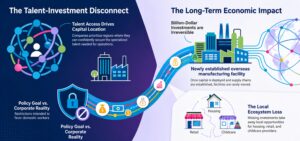
The immigration attorney on the panel noted that policies can change from one administration to the next and that future policy shifts could alter corporate decision-making. While that’s certainly possible, major investments are rarely reversible. Companies don’t abandon billion-dollar facilities, supply chains, and workforce development initiatives simply because a policy changes. The reality is that once significant capital has been deployed and talent ecosystems have been established, those investments tend to remain in place for decades.
The impact extends well beyond the jobs created inside a manufacturing facility. A new plant can generate opportunities throughout the surrounding community, supporting housing, restaurants, childcare providers, hotels, retailers, suppliers, and other local businesses. When that investment goes elsewhere, those opportunities often go with it.
As a result, workforce mobility decisions can have consequences far beyond immigration numbers. Companies consider capital, infrastructure, regulation, and access to talent when deciding where to invest. When the talent required to launch or support an operation is unable to be secured with confidence, the investment may follow the talent rather than the location policymakers intended to strengthen.
Regardless of one’s political perspective, every policy choice creates both intended and unintended consequences. The experiences shared at the RDC meeting highlight how immigration policy can shape more than workforce access as it can also influence where companies choose to invest, build, and grow. And once those investments are made elsewhere, the economic consequences may be felt for decades.
About NuCompass
NuCompass Mobility is a veteran-owned, independent mobility management company, offering a comprehensive range of global mobility and U.S. domestic relocation services. For more information about how NuCompass and our CoPilot® or CoPilot Express™ platforms can support your global mobility needs, visit our technology center today!